When planning a home remodel, choosing the right materials can make the difference between a renovation that stands the test of time and one that needs repairs within a few years. The best remodeling materials combine durability with aesthetic appeal, ensuring your investment delivers both beauty and longevity.
Top Durable Materials for Kitchen Remodels
Kitchens demand materials that withstand daily wear, moisture, and temperature changes while maintaining their visual appeal.
Quartz Countertops
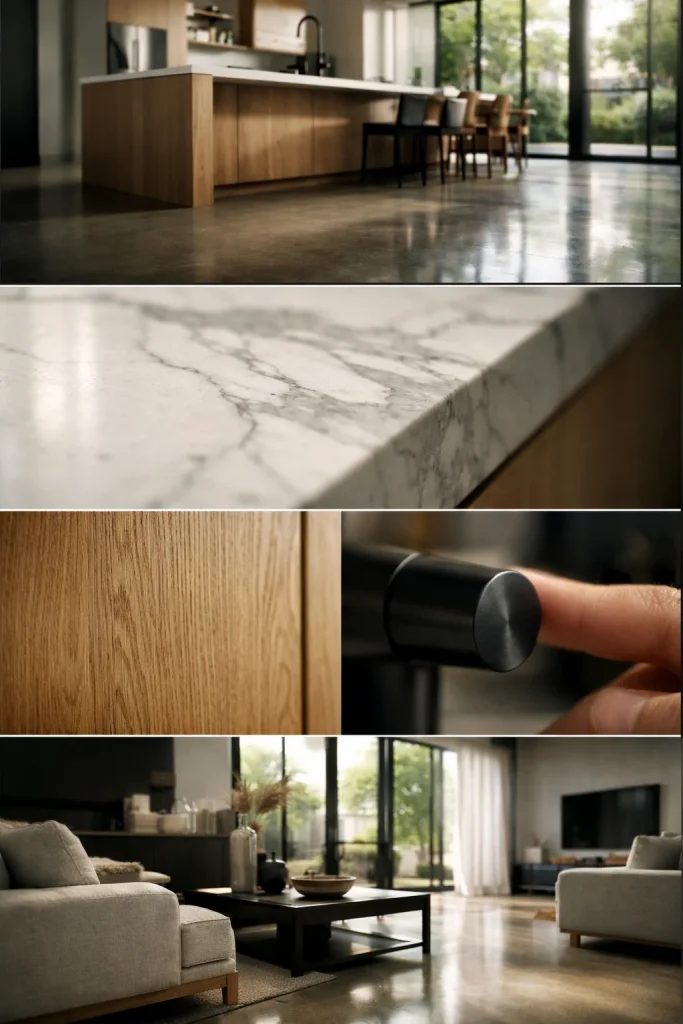
Quartz has become the gold standard for kitchen countertops, offering exceptional durability without the maintenance requirements of natural stone. Unlike granite, quartz doesn’t require sealing and resists staining from wine, coffee, and cooking oils. The engineered material comes in countless colors and patterns, from classic marble looks to bold contemporary designs. Expect quartz to last 20+ years with minimal maintenance.
Porcelain Tile Flooring
Porcelain tile delivers outstanding durability for kitchen floors, resisting scratches, moisture, and heavy foot traffic. Modern porcelain tiles can mimic hardwood, natural stone, or concrete while offering superior water resistance. Large-format tiles create a seamless look with fewer grout lines, making cleaning easier and enhancing the visual flow of your space.
Solid Wood Cabinets
While more expensive than particleboard alternatives, solid wood cabinets provide unmatched longevity. Hardwoods like maple, cherry, and oak can be refinished multiple times over their lifespan, adapting to changing design trends. Dovetail joinery and soft-close hinges further extend cabinet life while adding everyday convenience.
Bathroom Remodeling Materials That Last
Bathrooms face constant moisture exposure, making material selection critical for preventing mold, water damage, and premature deterioration.
Porcelain and Ceramic Tile
Large-format porcelain tiles minimize grout lines in shower enclosures, reducing maintenance and potential leak points. Rectified edges allow for tighter grout joints, creating a more seamless appearance. For floors, textured porcelain provides slip resistance without sacrificing style.
Solid Surface Vanity Tops
Materials like Corian or quartz offer seamless integration with undermount sinks, eliminating the caulk lines where moisture and mildew accumulate. These non-porous surfaces resist bacteria growth and can be refinished if scratched, extending their lifespan well beyond laminate alternatives.
Fiberglass-Reinforced Acrylic Tubs
Modern acrylic tubs combine affordability with durability, resisting chipping and cracking better than traditional cast iron. The lightweight material simplifies installation while retaining heat better than fiberglass alone, creating a more comfortable bathing experience.
Living Space Materials for Style and Longevity
Main living areas require materials that balance aesthetic impact with the ability to withstand daily family life.
Engineered Hardwood Flooring
Engineered hardwood offers the warmth and beauty of solid wood with enhanced dimensional stability. The layered construction resists warping from humidity changes, making it suitable for basements and areas where solid hardwood might fail. Quality engineered floors can be refinished at least once, providing decades of service.
Luxury Vinyl Plank (LVP)
Today’s luxury vinyl plank flooring has evolved dramatically from older vinyl products. Premium LVP features realistic wood grain textures, enhanced wear layers that resist pet scratches, and waterproof cores perfect for active households. Installation is straightforward, and the material works beautifully over existing floors in many cases.
Shiplap and Engineered Wood Paneling
Accent walls using shiplap or engineered wood panels add character while protecting walls in high-traffic areas. Primed MDF shiplap offers affordability and ease of installation, while solid wood options provide authentic texture that improves with age.
Exterior Remodeling Materials Built to Last
Exterior materials face harsh weather conditions, UV exposure, and temperature extremes, demanding superior durability.
Fiber Cement Siding
Fiber cement siding like James Hardie resists rot, fire, and pest damage while maintaining its appearance for 30+ years. The material accepts paint beautifully and won’t crack or warp like traditional wood siding. While installation costs run higher than vinyl, the extended lifespan and minimal maintenance deliver excellent long-term value.
Composite Decking
Composite decking materials combine recycled wood fibers with plastic polymers, creating boards that resist fading, staining, and splintering. Unlike wood decks requiring annual staining, composite options need only occasional cleaning. Premium brands offer 25-year warranties covering both materials and fade resistance.
Architectural Asphalt Shingles
Dimensional asphalt shingles provide excellent weather protection with Class 4 impact ratings that may reduce insurance costs. Quality architectural shingles last 30-50 years and come in various colors to complement any exterior style. Proper attic ventilation and installation techniques maximize shingle lifespan.
Window and Door Materials Worth the Investment
Windows and doors significantly impact energy efficiency, security, and curb appeal.
Vinyl-Clad Wood Windows
These windows combine a solid wood interior with a low-maintenance vinyl exterior, offering the best of both materials. The wood provides structural strength and interior beauty, while vinyl cladding eliminates exterior painting and resists moisture damage.
Fiberglass Entry Doors
Fiberglass doors resist denting, warping, and cracking while convincingly mimicking wood grain textures. The material insulates better than steel, reducing energy costs, and won’t rust in coastal climates. Quality fiberglass doors can last 30+ years with minimal maintenance beyond occasional cleaning.
Making Smart Material Choices for Your Remodel
The best remodeling materials for your project depend on your specific needs, budget, and design preferences. Consider these factors when making selections:
Lifestyle compatibility: Households with children or pets need materials that resist scratches, stains, and moisture more than empty nesters might require.
Climate considerations: Materials performing well in dry climates may fail in humid regions, and vice versa.
Maintenance willingness: Be realistic about the upkeep you’re willing to perform. Natural materials like hardwood and granite require more maintenance than engineered alternatives.
Long-term value: Premium materials often cost more upfront but deliver lower lifetime costs through extended durability and reduced replacement frequency.
Working with Professional Remodelers
Professional remodeling contractors bring valuable expertise in material selection, helping you avoid costly mistakes and ensuring proper installation. Experienced remodelers understand which materials perform best in your climate, can source products at better pricing, and know installation techniques that maximize material longevity.
Quality installation matters as much as material quality. The best materials will fail prematurely if improperly installed, while professional workmanship ensures your investment delivers its full expected lifespan.